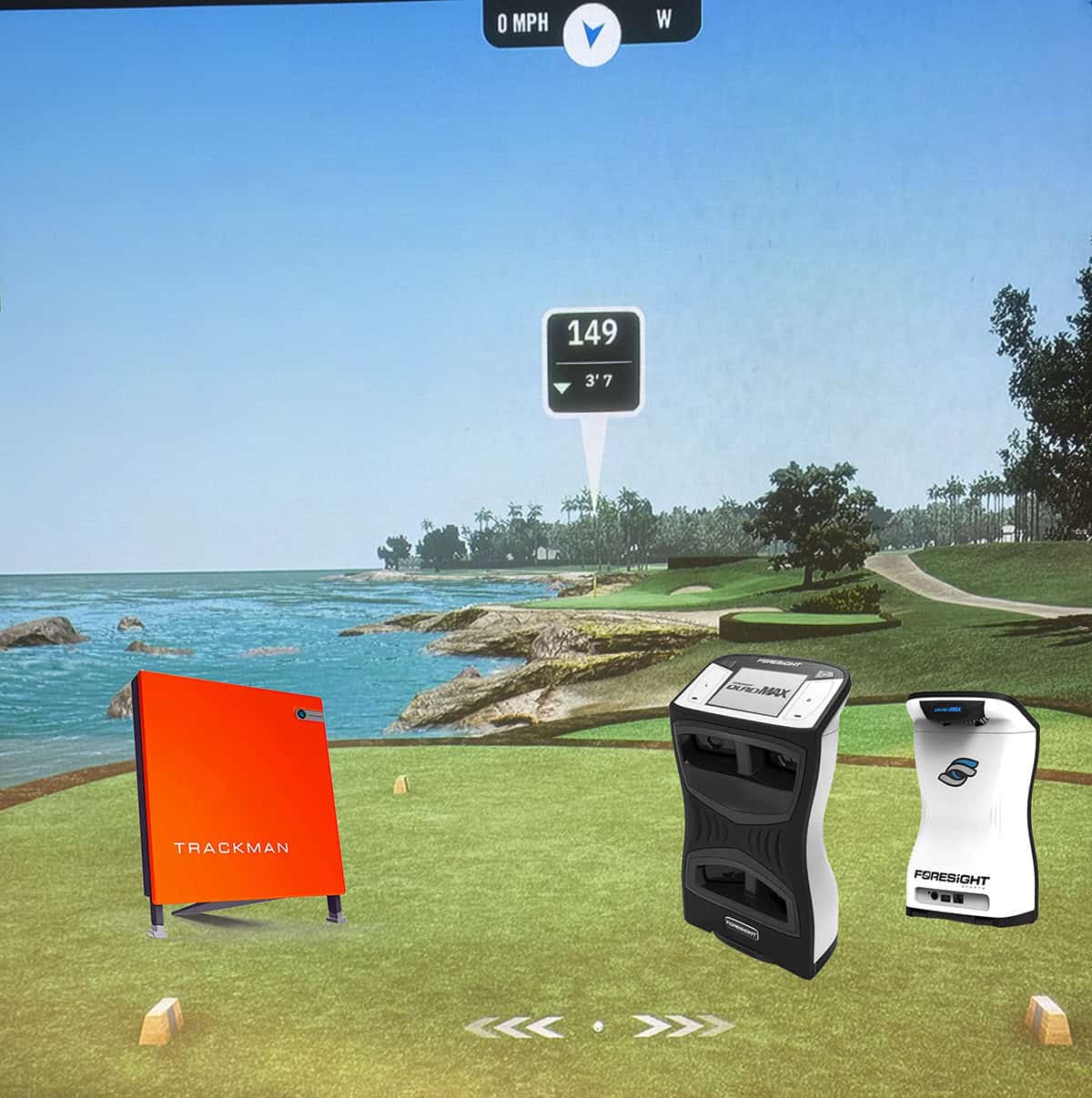
Foresight vs. Trackman Launch Monitors: An Operator’s Honest Comparison

Written by Connor Clay: VP of Golf at Tee It Up Canton

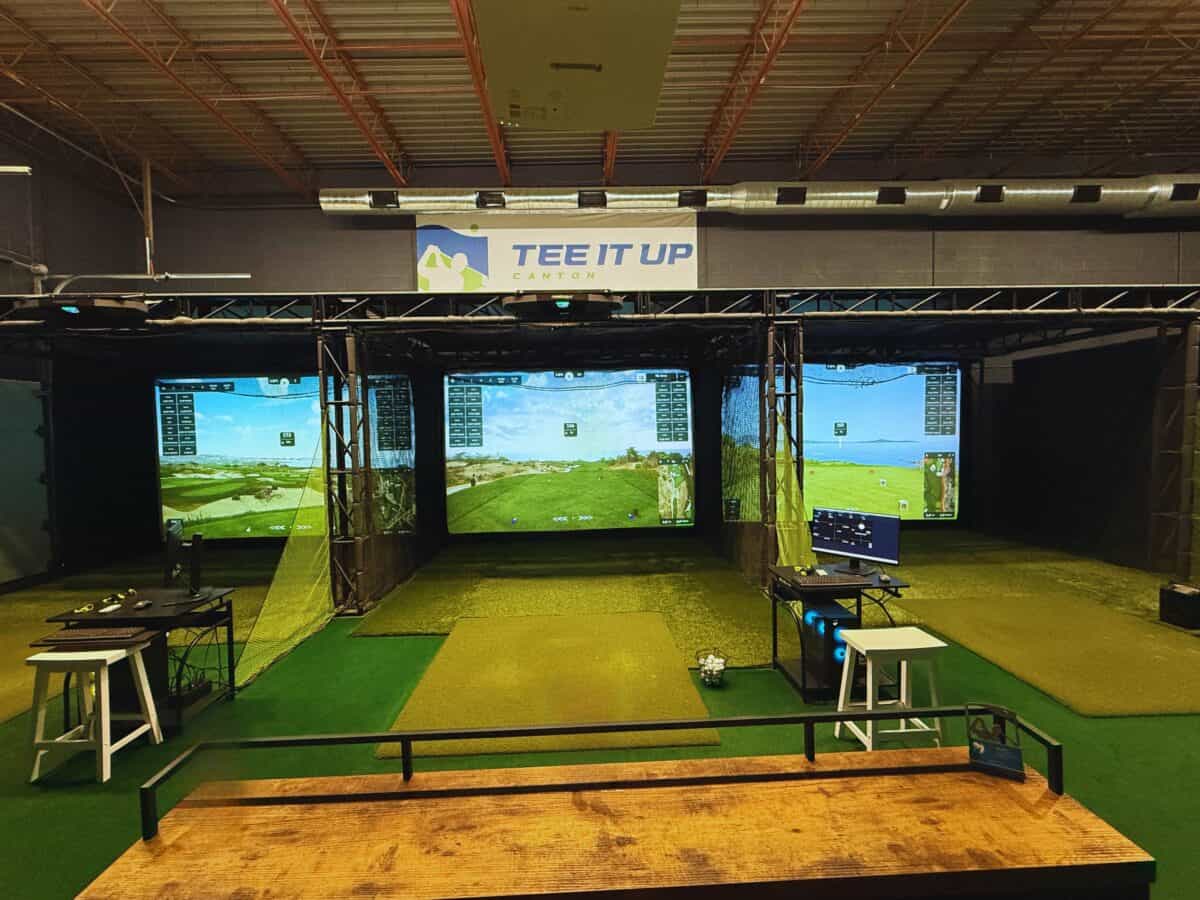
I run a four-bay indoor golf facility in Stark County. We hit on Foresight units running GSPro. My daily experience of this technology comes from one side of this comparison, so read everything below with that in mind.

That is also why this post includes a section on where our own equipment is worse. A comparison that costs the author nothing is not a comparison. It is an advertisement with a table in it.

The short version: radar is the better tool outdoors and the better tool for measuring what a golf ball actually does over 250 yards. Cameras are the better tool in a room with a screen 12 feet away. Trackman’s newer indoor unit deliberately blurs that line, and it works. The rest is why, what each one costs to own for five years, and which one belongs in your space.

How each one actually measures a golf shot

Almost every argument about these two systems comes down to one difference, so it is worth being precise about it.

Trackman is radar. It uses Doppler radar to track the ball and the club through space. It watches the shot and measures the trajectory over real distance, then models the portion it didn’t see. When a Trackman tells you a shot carried 168 yards, it is reporting something close to an observation.

Foresight is photometric. High-speed cameras fire at impact and capture the ball and clubface in the first few inches of travel. From those launch conditions, the software computes where the ball would go. When a Foresight tells you a shot carried 168 yards, it reports a calculation built on a precise measurement of the moment that determined the shot.

Neither approach is more accurate in the abstract. Radar watches the shot happen. Cameras measure the instant that causes the shot.

Indoors vs outdoors

Outdoors, radar wins, and it is not particularly close. Give a Trackman a full flight to track, and it gets what it was designed for: real carry, real apex, real curve, measured against the actual ball in the actual wind. An outdoor camera unit is still computing a flight it never sees.

Indoors, radar is working with almost nothing. The ball leaves the tee and hits a screen a fraction of a second later. There is very little flight to observe, which is why indoor radar setups often want a metallic dot on the ball to read spin reliably, and why radar wants depth behind the hitting area.

Cameras do not care about the screen at all. The measurement is complete before the ball has traveled three feet. That’s why photometric units took over the commercial simulator market. The screen is not an obstacle to the measurement. It is just where the ball lands.

Credit where it belongs: Trackman built the iO specifically because indoor radar was compromised. The iO is a ceiling-mounted unit that pairs radar with a high-speed impact camera, and it exists because Trackman saw its own indoor weakness and engineered around it instead of arguing about it. That is the right response, and it means the old “radar is bad indoors” line is out of date if you are talking about the iO specifically.

Space and layout. This is the part people building a garage sim actually need:

  • Foresight floor units sit beside the ball. They need to be repositioned when a left-hander steps in, which is trivial for a home setup and a small friction point in a commercial bay you will feel a hundred times a week.
  • Ceiling-mounted units, the Foresight Falcon and the Trackman iO, keep the floor clear and let players switch sides instantly. That is worth real money in a rental bay.
  • Trackman 4 sits behind the hitter and wants room to see. Check the current tee-to-screen spec against your actual room before you fall in love with it.
  • Ceiling height and mount reinforcement matter for any overhead unit. Measure before you shop.

Sidebar: what we run and why

At Tee It Up Canton, we feature two Foresight Falcons and two GCQuads. We were familiar with Foresight’s hardware and software long before we opened our doors and believed (and still believe) camera-based launch monitors are more accurate when hitting into a screen indoors. 

The dots

Most comparisons treat the club stickers as a Foresight quirk. They are not. Both systems use reflective markers, just in different places.
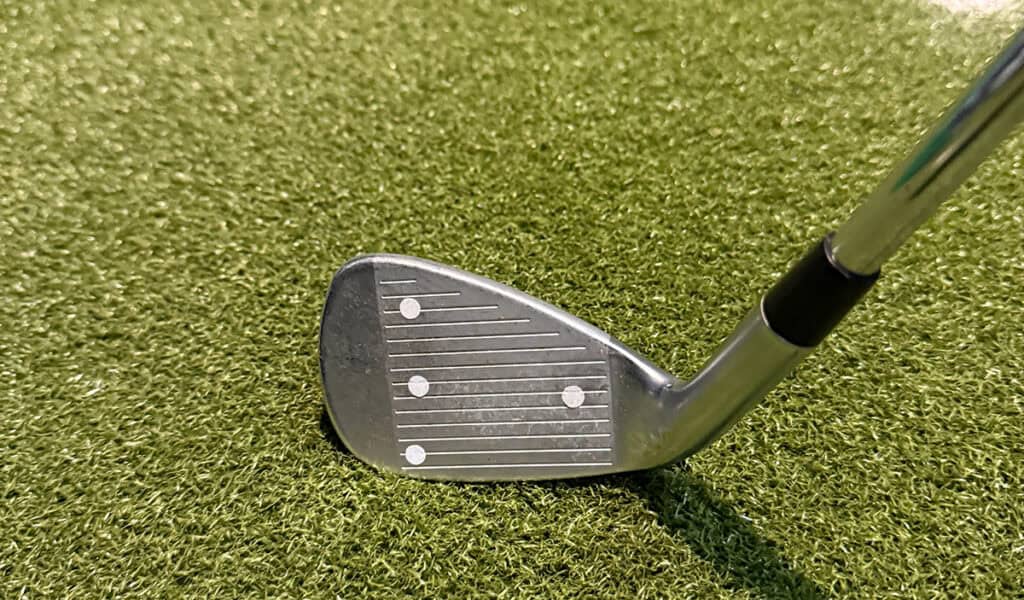
club with foresight dots on it

Foresight puts them on the clubface. The unit reads ball data without stickers, indoors or out. Markers are only required if you want club data, and there are two modes. One dot gives you clubhead speed, smash factor, attack angle and path. Four dots unlock the full picture: delivered loft and lie, face angle, impact location and closure rate. These are where the camera models shine.
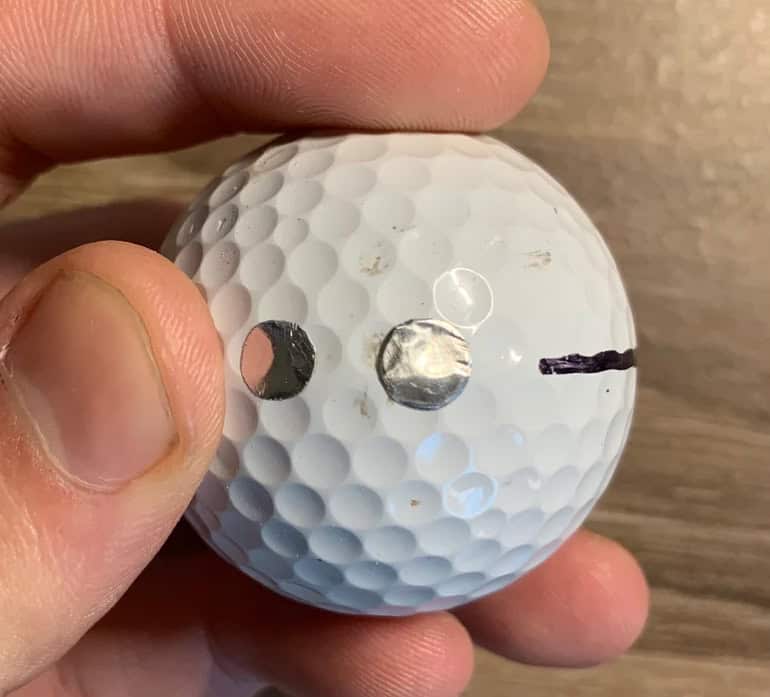
trackman golf balls with metallic dots on them

Trackman commonly puts them on the ball. Indoors, with almost no flight to measure, a metallic dot on the ball is the standard way to get reliable spin. Most brands also offer RCT golf balls with a built-in metallic dot, but they aren’t cheap. So the choice is not stickers vs. no stickers. It is stickers on your clubface or stickers on your golf balls.

What that means if you are running a business, which is the part nobody writes about:

  • Guests will not apply dots. Not sometimes. Ever. Plan your bay experience around a unit that produces good ball data with no prep, because that is what will actually happen.
  • Guests will ask for clubhead speed which means you and your team will have to apply dots if you use a Foresight launch monitor.
  • Dots come off wedges first, and they come off anything that gets wet.
  • Dots do not put a large dent in the budget. However, staff time to reapply is the real cost, and it is small but not zero.
  • In a rental bay, most guests only want to see distances and accurate ball physics on the course. They do occasionally ask for clubhead speed though. In a lesson bay, all of the data matters a great deal.

At Tee It Up, we usually buy new dots about every six weeks. So, you can plan for that if you have a facility with around four or five bays.

Where our own equipment falls short

The blind spot that cannot correct itself. A camera unit never sees the ball fly, so it has no feedback loop. If the model is wrong for a particular player, a particular ball or a particular set of launch conditions, nothing in the system will ever notice. Outdoor radar gets corrected by reality on every shot. That is a structural advantage, and there is no way to argue around it.

The hitting zone is a hard constraint. Ball placement matters, alignment matters and shots struck near the edge of the capture area can degrade or fail to register at all.

The GC Falcons sometimes miss shots. We’ve noticed our overhead units are less reliable, especially with white club heads or left-handed customers.

Trackman is the reference standard, and that is a commercial disadvantage for us. Tour statistics run on Trackman data. If a customer walks into my facility knowing his Trackman numbers, my numbers have to explain themselves. Whether the gap is real, whether it is the ball model, whether it is a calibration issue, I am the one arguing. Challenging the reference standard costs the benefit of the doubt every time.

Software: open vs closed

These are two different strategies, and both are defensible. They fail in different ways.

Foresight is open. The units run FSX Play and FSX 2020 natively, and they also connect to GSPro, E6 Connect and Awesome Golf. You get more course content per dollar, and you are not locked to one vendor’s roadmap.

The cost is integration. You are running two companies’ software against one piece of hardware, and when something breaks, nobody owns the problem but you. Permissions errors. Course folder paths. A GSPro update that changes something on a Friday night with bays booked Saturday morning. That is a real operational tax, and it lands on whoever opens the building.

Trackman is closed. Trackman Performance Studio and Virtual Golf 3 only. Trackman’s software does not support GSPro or E6 Connect.

One correction, because a few sites currently get this wrong. If you have read that Trackman works with GSPro, it does not, at least not in any supported way. Some of the pages making that claim often show up in Google searches. Confirm any compatibility question with the manufacturer before you spend five figures on the assumption.

What this decides for a facility. GSPro’s community course library and per-bay pricing let a small operator offer hundreds of courses at $30 an hour and stay in business. For a home room, it is a preference. For a commercial bay, it’s economics.

What each one costs to buy

Unit

Type

Approximate price

Foresight GC3S

Camera, subscription model

~$3,299

Foresight GCQuad

Camera, four-camera

~$11,999 base, bundles higher 

Foresight QuadMAX

Camera, four-camera, flagship

~$19,999

Foresight Falcon

Camera, ceiling mount

~$16,999

Trackman iO

Radar plus camera, ceiling mount

~$13,995 to $23,995

Trackman 4

Radar, portable

~$24,995

Two things the spec sheets bury.

The iO’s headline price is before club data. Confirm exactly what unlocking full club data adds, because it is a significant number and it changes the comparison.

The launch monitor is roughly half the cost of a working bay. Enclosure, screen (these things wear out quickly), mat, projector, PC with a GPU that can actually drive the software, cabling, install. Budget the other half up front, or you will own an expensive box sitting in a room you cannot use yet.

Each of our bays costs around $50,000 when you incorporate everything listed above.

What each one costs per year

Ongoing cost

Approximate annual

Trackman TPS, Home tier

~$700/year

Trackman TPS, Home Complete and Commercial

~$1,100/year

Foresight Gold subscription (GC3S and Bushnell LPi)

~$499/year after a free first year

Foresight full units (Falcon, QuadMAX, GCQuad, GC3)

Ship unlocked

GSPro

~$250/year per bay

First-year software is usually bundled into the purchase on both sides, which makes it easy to forget the bill exists until month 13.

Commercial licensing on the Trackman side is quote-based. Get it in writing before you sign anything, and get it in writing for the number of bays you actually plan to run, not the one you are starting with.

The line items nobody quotes you:

  • Club or ball markers, ongoing
  • Hitting mat replacement, which for a commercial bay is a scheduled expense, not an if
  • Projector bulbs or full projector replacement
  • PC refresh cycle, because simulator software GPU requirements move every couple of years
  • Screen and impact netting wear

Who each one is actually for

Trackman 4. You coach or fit outdoors as well as indoors; you need to take the unit to a range or a lesson tee, and you need measured ball flight rather than computed ball flight.

Trackman iO. You are building one dedicated room; you want the coaching and analysis suite; you want one vendor and one support number; and the brand recognition has commercial value to you.

Foresight Quad family. You need face-level truth. Impact location, face angle, delivered loft. If you are fitting clubs, this is what you are paying for.

Foresight plus GSPro. You are running entertainment bays, and you need maximum course variety per dollar with an ongoing cost that survives a slow summer.

Where this comparison is weak

While I’d love to say I’ve spent equal time hitting on Trackman and Foresight, I have not. Though my country club does use Trackman IO for lessons in the winter, so I am familiar with it. Most of the info on Foresight launch models is from my own experience. But I had to rely a lot on Trackman’s website for their pricing and data. If you’d like to contact me with corrections or suggestions, fill out a form on our website

Go hit both before you spend the money

If you want to compare these yourself rather than take my word for it, facilities in the area run different setups. Here is our directory of Canton-area indoor golf facilities, so you can see for yourself.

And if you want an hour on a Foresight before you spend five figures on one, our bays are $30 an hour. An hour of your time is a cheap way to find out whether a $15,000 decision is the right one.

FAQ

Does Trackman work with GSPro? No. Trackman’s software does not support GSPro or E6 Connect. Community workarounds exist, but they are unsupported and can break with any update.

Do you need dots on your clubs for a Foresight? Only for club data. Ball data works with no markers at all. One dot gives you clubhead speed, smash factor, attack angle and path. Four dots unlock full face data.

Which is more accurate indoors? For clubface data, the camera systems measure the face directly. For ball data in a room, both are strong, and the Trackman iO was built specifically to close the indoor gap. The honest answer is that they are accurate at different things.

Which is better outdoors? Radar. It tracks the actual flight rather than computing it. If outdoor use is a real part of your plan, that should weigh heavily.

What is the cheapest way into fitting-grade club data? The entry-level camera units with a club data subscription, but check what the subscription unlocks and what it costs annually before comparing sticker prices. 
Indoor Golf in Canton, Ohio: A Guide to Simulator Facilities in the Area

Written by Connor Clay: VP of Golf at Tee It Up Canton

Whether you’re trying to stay sharp through the winter, work on your swing before the season starts, or just looking for something fun to do with friends, indoor golf simulators have become one of the most popular options in Northeast Ohio. The Canton and Stark County area, along with nearby Akron, has seen serious growth in simulator facilities over the past few years, ranging from performance-focused training centers to bar-and-lounge setups built around casual fun.

Here’s a look at the options within a reasonable drive of Canton.

Tee It Up Canton (North Canton, Ohio)

A dedicated golf performance center on Whipple Avenue, Tee It Up features four simulator bays running Foresight launch monitors, widely considered among the most accurate technology in the industry, paired with GSPro software. The facility includes a large putting green and offers PGA-certified instruction led by Matt Jasinski. Bay rentals run $30 per hour, and unlimited monthly memberships are affordable. If game improvement is the priority rather than a night out, this one is built for it.

7976 Whipple Ave. NW, North Canton, OH 44720 | 330-461-9840 | teeitupcanton.com

X-Golf North Canton (Canton, Ohio)

Part of the national X-Golf franchise, the North Canton location offers simulator bays alongside food, a full bar, shuffleboard and darts. The X-Golf system uses a combination of camera, infrared, and radar tracking and includes an auto-teeing feature. They run structured winter leagues throughout the season and offer PGA-certified instruction on-site. A good option if you want the simulator experience bundled with entertainment. 

4385 Whipple Ave. NW, Canton, OH 44718 | 234-360-3086 | playxgolf.com

The Back Nine Golf (Canton, Ohio)

The Back Nine is a self-service simulator facility with 24/7 access, making it one of the more flexible options in the area. Bays run Full Swing simulators with the ION3 overhead camera system, which lets you see your actual ball strike frame by frame. Bay rentals are open to the public without a membership, priced at $40 per hour for up to 2 guests, and you’re welcome to bring your own food and drinks. The focus is on personal practice at your own pace. We looked at doing something like this at first, but the lack of staff scared us off.

2648 Easton St. NE, Canton, OH 44721 | 234-999-9008 | thebackninegolf.com

TeeShotz Indoor Golf (Massillon, Ohio)

Located on Wales Road in Massillon, TeeShotz runs simulator bays with a fun, accessible atmosphere and a slow-motion impact camera that shows your club face at contact. In addition to bay rentals, they offer golf lessons, training aids, driving range mode and arcade games. No alcohol is served, making it a solid family-friendly option on the west side of Stark County.

2142 Wales Rd. NE, Massillon, OH 44646 | 330-574-3100 | teeshotzindoorgolf.com

Ohio Golf Club (Akron, Ohio)

Ohio Golf Club features private hitting bays with TrackMan 4 simulators and a large indoor putting and short game area (jealous), plus dedicated spaces for PGA instruction and custom club fitting. They offer memberships and leagues, as well as public bay rentals. While their setup appears premium, the main feature is the massive putting green.

2262 S. Arlington Road, Akron, OH 44319 | 330-958-0052 | ohiogolfclubindoor.com

Know of a facility we missed? Reach out, and we’ll keep this list updated.

Last updated: July 2026.

An Exclusive Interview with Professional Golfer Maxwell Moldovan

Maxwell Moldovan. It’s a name you may have heard much about if you existed in the northeast Ohio golf space in the last ten years. A two-time high school state champion with several other accolades to his name before he even attended college, Max made quite the name for himself before he even turned 18. 

Now, he’s graduated from Ohio State and is working towards achieving his dream of playing golf for a living. 

Listen to the Full Interview

Welcome back to Tee It Up Canton’s second interview in our series of golf conversations. My name’s Connor Clay, Vice President of Golf here at Tee It Up Canton, an indoor golf facility in Stark County, Ohio. We have three bays, making it a great place to practice golf in the winter. Today, I’m honored to have Maxwell Moldovan as our guest. Max, thanks for being here!

Yeah, thanks for having me.

If you don’t know Max, he’s a mythological creature of sorts in the golfing world. I’ve been taking lessons from your dad for years, hearing about your accomplishments, and now seeing you as an adult—it’s been incredible. Max recently graduated from Ohio State and is now pursuing professional golf. First question: How are you doing? It’s winter, you’re back in Ohio, and you just wrapped up Q School. How did it feel to get a taste of that environment?

It was a good experience. Unfortunately, I didn’t play as well as I’d hoped, but I learned a lot. The more experience you get as a young pro, the more it helps down the line. Although I didn’t make it through the second stage, I learned a lot about my game. Next time I’m in that situation, I’ll feel more comfortable. It’s nice to be home, celebrate Christmas with family and friends, and unwind after a long, strenuous year. I’m looking forward to a big 2025.

What does the road ahead look like for you now that you’re out of college? What are your goals for 2025?

Coming out of school, I finished in the top 25 on PGA Tour U, earning status on the Canadian swing of PGA Tour Americas. That also gets me status for the Latin swing in spring, so I’ll be down there in March, April, and May. My main goal for 2025 is to earn Korn Ferry status by year’s end, which can happen in various ways. Pro golf is an adjustment—playing for a living is different than playing just for the love of the game. I’m finding a balance between treating it as my job and still loving it. I’m excited for what 2025 holds.

You mentioned the PGA Tour Americas. Can you describe what that is, who’s on it, and how it works?

The PGA Tour is the pinnacle, followed by the Korn Ferry Tour, and then the PGA Tour Americas. It used to be two separate tours—PGA Tour Latin America and PGA Tour Canada—but now it’s one big season across both regions. At the end of the season, the top 10 on the points list earn full Korn Ferry status for the following year. Having status on this tour is a blessing, especially since many of my peers are struggling without any status. Although I didn’t have a great year in 2024, I’m grateful to have a place to compete next year.

Your dad has been my golf coach since my early 20s. Having a dad who played professionally and teaches golf—how did that impact your love for the game and improvement?

I fell in love with the game quickly. My dad never forced it on me. He’d take me to the golf course, go on cart rides, or play putt-putt on family vacations. My parents, both competitive athletes, did a great job of not forcing sports on me. I developed my love for golf naturally. My dad has been a huge resource—he started me in the game and built my swing. I still work with him a lot.

Do you still go to him for advice?

Absolutely. My dad knows my swing better than anyone. He’s seen it at its best and when it’s struggling. He played pro golf too, so he understands the challenges and has been a great support.

Did you ever dabble in other sports?

I played baseball, football, and basketball growing up. In middle and high school, I focused on basketball and golf. I loved basketball, partly because of my mom, who played in college. However, after breaking my wrist in freshman year, I decided to focus on golf.

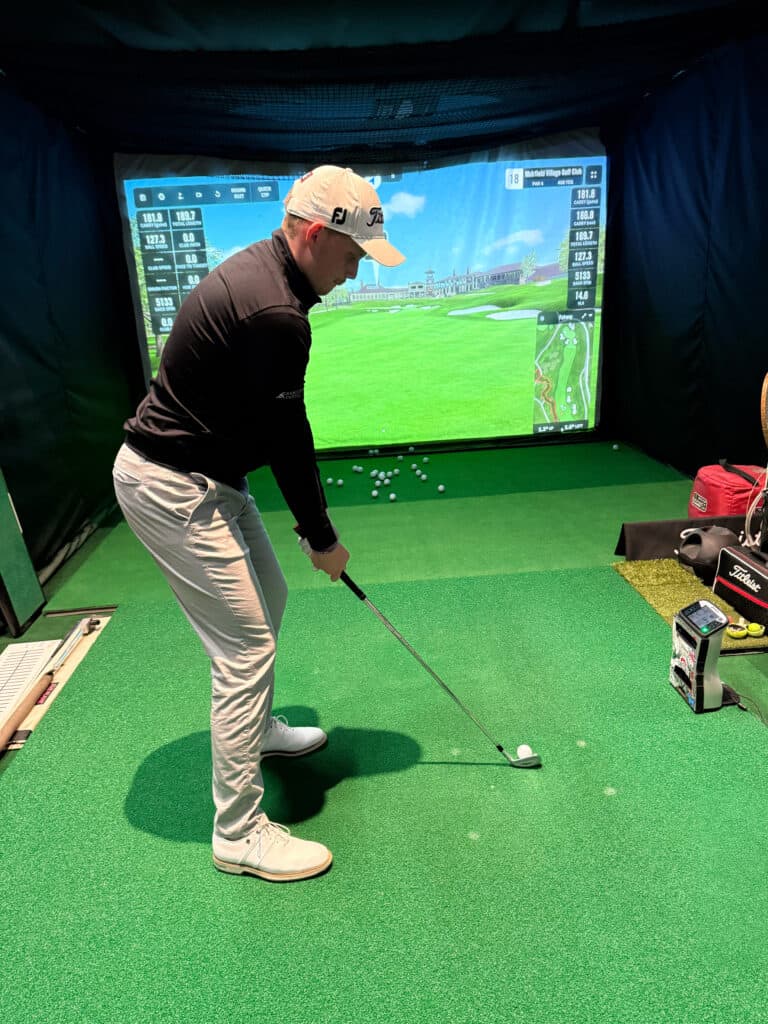
Max Moldovan stands over an iron shot at Tee It Up Canton

Let’s take a step back and talk about your junior golf career. A lot of people in Northeast Ohio knew you before high school because you were winning tournaments. How did it feel going through all that?

It was a lot of fun. I was fortunate to have early success in US Kids events and the AJGA. That success helped me develop a love for competition. Some of my best memories are from high school and junior golf—traveling with my parents, friends, and teammates. Those were simpler times when every tournament didn’t feel like it impacted my future. I really enjoyed it.

Did you feel pressure from expectations because of your success and family connections? If so, how did you handle it?

I embraced it. I’ve always put more pressure on myself than anyone else does. That pressure has pushed me to succeed, but it’s also been a challenge at times. I try to focus on my God-given talent and use it to glorify God and inspire others. That perspective keeps me grounded.

Do you have a favorite memory from high school or junior golf?

Winning the Ohio State Championship as a sophomore and junior was special. Having 20 of my closest friends, my family, and my neighbors there to support me was amazing. In 2018, I also won co-medalist honors with Jackson Chandler, my teammate at Ohio State and now one of my best friends. Those memories and friendships are some of the best things about high school sports.

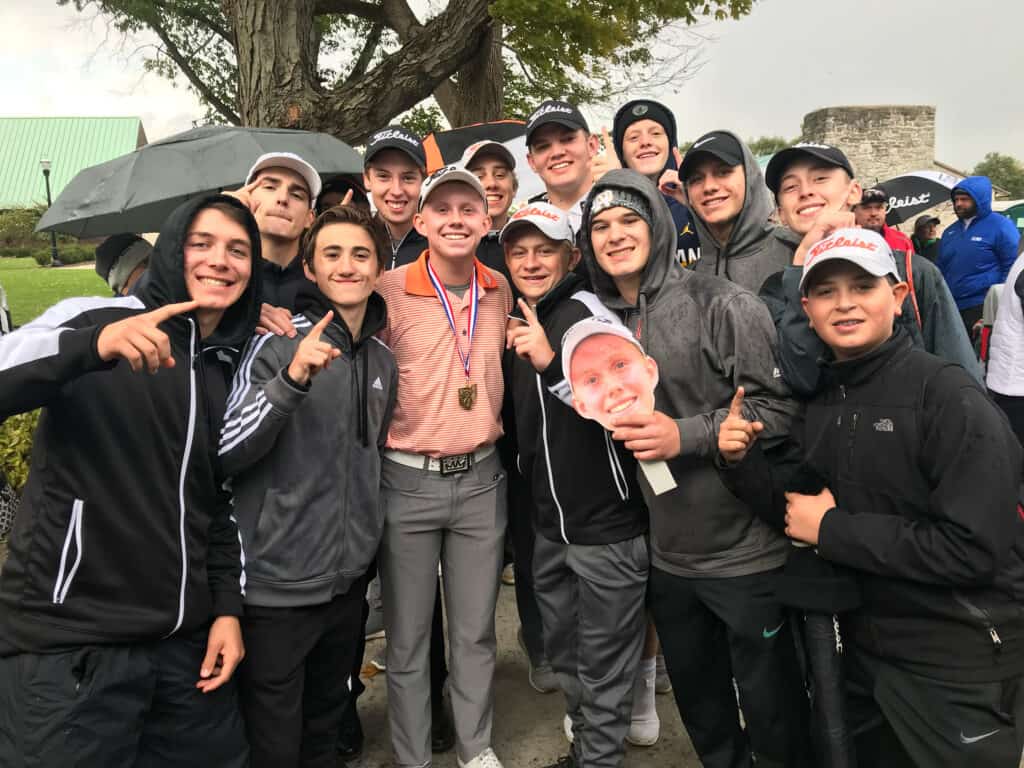
Max Moldovan after winning the Ohio boys high school golf championship

Let’s talk about your time at Ohio State. College golf doesn’t get as much attention as other levels. Can you give us some insight into it?

College golf is very different from high school. It’s mostly three-round tournaments with 10–20 teams, similar to pro events with large fields and lots of travel. Balancing school, travel, and practice is tough, but it teaches you to appreciate the game’s challenges. College golf is incredibly competitive, and my time at Ohio State was some of the best years of my life.

You’ve had the honor of playing in three U.S. Opens, making the cut in one of them. What are some of your coolest experiences from those events?

One of my favorite memories was playing a practice round with Scottie Scheffler at my first U.S. Open. Scottie is currently my favorite player because of both his golf game and his faith in God. So, needless to say, I was very nervous over my first tee shot. It’s also been amazing to share those experiences with my family and friends, who’ve supported me. Seeing their joy in being part of it makes it even more special.

What did you learn from playing with Scottie?

I learned a lot from watching him during the practice round. He spent most of his time around the greens, hitting countless chips and putts. That taught me how important the short game is and how small the margins are at the pro level.

How did you handle the pressure of competing at the highest level?

It’s tough, but I’ve learned to embrace it. I remember shaking while over an eight-foot putt in my first U.S. Open, but I made it. By the time I played the next year, I had learned to view pressure as a privilege. If you feel pressure, it means you’re where you want to be, chasing your dreams.

Maxwell Moldovan at the US Open

What advice would you give kids trying to improve their game?

Make practice fun so you don’t burn out. Play rounds with friends or practice on the course instead of just hitting balls on the range. Balance working on your weaknesses with improving your strengths. For example, wedges have always been a strength for me, so I’ve focused on mastering my numbers inside 150 yards, which is where you score in tournament golf.

How have technological advances in golf helped your game and the sport overall?

Technology has been huge. Tools like launch monitors and simulators are great for improving your game year-round, especially in places like Ohio where you can’t play outside during winter. At Ohio State, I used tools like TrackMan and PuttView a lot. These tools give you actionable data to improve. My next investment will probably be a GCQuad or TrackMan because they’re so helpful.

That’s great. I’ve learned so much about my own game using those tools too. It’s exciting to see how golf is embracing technology and innovation. Thanks so much for your time, Max. This was a great conversation.

Thank you for having me!

An Exclusive Interview with PGA Tour Pro Justin Lower

On a cool December day in northeast Ohio, PGA Tour Pro Justin Lower strolled into Tee It Up Canton looking like many of our other customers. 

He had his Malone golf bag in hand and wore clothes no different than we see here daily. 

Except he’s not a normal golfer. He’s a professional. Here is his story. 

Listen to the Full Interview

All right. Welcome to our first interview from Tee It Up Canton. My name is Connor Clay. We are an indoor golf facility here in Northeast Ohio, and I’m so honored to have a guest that I’ve admired for the last three years since I met him, Justin Lower, PGA Tour professional. Justin, thanks so much for being here.

Thanks for having me.

Of course. So how’s it going? I know you’re just coming off the fall swing of the PGA Tour. Were you happy with the results?

Yeah, for the fall, for sure. I had three top tens and made a majority of the cuts. My goal was to make all the cuts, but it was still a good year overall. I made over 20 cuts, which was nice. But I played a lot—31 events. It was a long season, so it’s nice to just sit back and chill right now.

Absolutely. 31 events? What’s an average PGA Tour schedule?

It depends on your world ranking. The better your ranking, the less you need to play. Everyone has to play at least 15 events to count it as an official season for retirement or pension purposes. With the new elevated schedule, guys can play less if they’re performing well. I’d say the average is probably between 22 and 27 events. I definitely played more than average, but I felt like I had to. There were certain things I was chasing, so hopefully, it pays off.

Well, we had a lot of fun watching you this fall. What are your goals for the 2025 season?

The Tour is making changes, shifting from the top 125 to the top 100, so my main goal is to ensure full status for 2026 by finishing in the top 100. The ultimate goal is to make the top 50 because that gets you into all the designated events and, ideally, the majors. I’d also love to win. I feel like I’m close and doing good things toward that. Winning is hard—only one winner out of 120–156 players each week. But it’s a big year for me since getting vested in the pension after five years would be huge.

A win would be amazing. Do you have a favorite course or tournament on tour?

There are a few. I love the Rocket Mortgage event in Detroit at Detroit Golf Club—an old-school Donald Ross course, kind of like Firestone but flatter. I also like the Mexico courses because they’re more open, giving me freedom off the tee. John Deere is another favorite; we had nationals there in college, so it’s special to me.

Those are some unique choices. It’s interesting that you like both tree-lined courses and wide-open ones. So, obviously, you’ve been doing this for a long time. Life changes as you grow up. What keeps you motivated to pursue your dream of being a PGA Tour Pro?

It’s something I’ve always wanted to do, and I love it. It’s not as glamorous as I thought, but it’s still amazing. Playing golf for a living, traveling the world, and seeing places I wouldn’t otherwise—like Scotland and Japan—is incredible. I get to experience unique courses, great food, and more. It’s been a blessing.

What’s one thing about PGA Tour life that would surprise average golf fans?

Most fans think our travel is covered or free, but it’s not. We’re independent contractors, so all expenses—flights, hotels, etc.—are on us. It’s organized but also chaotic. Not everyone flies private; many of us fly commercial or drive. My family often travels with me, and we look like gypsies with all our luggage.

That’s a funny image, but also surprising to hear. How has becoming a husband and then a dad impacted the way you approach golf?

Becoming a dad has had a bigger impact than becoming a husband. When Janise and I got married in 2019, I was still on the Korn Ferry Tour, just trying to move up. It changed a little—she was working, and we were both independent, grinding to get where we wanted. After our daughter was born, my perspective changed completely. It became more about her—making sure she’s happy and cared for, as well as ensuring Janise is comfortable on the road. We stay in Airbnbs more than hotels now for space, often traveling with other families with young kids. It’s fun and definitely takes a village.

I can relate. I just got married, and my wife has two kids, so I’ve realized it’s not about me anymore. Speaking of family, how did you first get into golf as a kid?

My dad cut down some clubs for me and took me out with my uncles. It was usually the three of them and me. I’d ride along in the cart, hit some shots, and eventually play full rounds. My first tournament was at a local course. My dad asked if I could still sign up, and they let me. I shot 61 for nine holes at eight years old and finished second. I was hooked from that moment.

Once it catches you, it really catches you. It sounds like you had a unique start, building courses and obstacle courses. Do you have a favorite junior golf moment?

My first tournament sticks with me. It wasn’t glamorous—I was so nervous I couldn’t eat breakfast and ended up dry-heaving on the course. Despite that, I finished second. My favorite memory, though, was winning my first junior tournament three years later at the same course. I woke up that day knowing I’d win and shot a 40 for nine holes to win by four or five shots. I wish I could play every round with that same confidence.

That’s incredible. You grew up playing at Lyons Den, a special local course. Can you describe it for people who might not know it?

It’s unique, depending on when you play. I’ve played it in snow and 100-degree heat. It’s not a country club, but it’s special to me. It taught me how to make birdies and be aggressive on the course. Over the years, it’s changed—the trees have grown bigger—but it still feels the same. I try to play it whenever I’m home, even if it’s just for fun.

A lot of kids here dream of becoming pros like you. What was the transition from college golf to pro status like?

It wasn’t smooth or glamorous. I turned pro in 2011 after graduating. The process is simple—enter a professional event and declare you’ll accept money if you place or make the cut. But I quickly learned there were many players better than me. I spent years on mini-tours, did Q-School six times, and worked my way up to the Korn Ferry Tour. I fell off it twice before finally earning my PGA Tour card in 2021 after a long, grueling two-year stretch due to COVID. It was emotional—happiness, tears, and relief all rolled into one.

What did it feel like when you finally got your PGA Tour card?

There were a lot of emotions, and I didn’t make it easy on myself. I was part of the 2021 class, but because of COVID, the 2020 and 2021 seasons were combined. It became one long season with 47 or 48 events. I played 41 or 42 of them. It was a grind. During the 2020 season, I was 19th on the points list, which would have been enough to graduate to the PGA Tour, but they didn’t have a graduating class that year because of COVID. Everything rolled over into 2021, and I dropped to 40th or 50th at one point, climbed back into the top 25, and then fell out again.

I finished the regular season at 30th—five spots outside the number. Thankfully, there were the Korn Ferry Finals events, which don’t exist anymore. I played well enough in those to get the final card, the 25th spot. It was a mix of happiness, tears, and relief—just the culmination of everything I’d worked for. It was a special moment.

That’s an amazing story. You and I have talked about being from Northeast Ohio and being Cleveland sports fans. Does LeBron’s quote, “In Northeast Ohio, nothing is given, everything is earned,” resonate with you?

Absolutely. That quote is etched on the yardage book cover I carry. I might not live my life by it, but I definitely live my golf life that way. I’ve had to earn everything in this game—nothing was handed to me. My journey has been one of perseverance, gaining perspective, and working hard. It’s been tough but rewarding. It might make for a good book someday!

As the professional golf landscape changes, how do you handle being on the bubble, especially with all the shifting goalposts?

Honestly, I’m not sure how I’ve done it. The goalposts keep shrinking, and it can be overwhelming. But I’ve learned to focus on myself and avoid getting caught up in the noise. Staying quiet and going about my business has been the best approach. There are moments when it feels easy and others when it feels impossible. The key is finding a balance and staying patient.

For young golfers who come here looking to improve—whether it’s making their high school team or breaking 40—what advice would you give?

Today’s young golfers have so many resources, especially through social media. YouTube, Instagram, and other platforms are full of great information. My advice is to find what works for you. Focus on speed—it’s a huge part of the game now. Short game and putting are also critical. Putting, especially, is a great equalizer. Above all, make sure you love the game and have fun. Golf can be brutal, but it’s incredibly rewarding if you stick with it.

Max Homa said recently, “If you’re an amateur golfer, this game is impossible. Just have fun.” Do you agree?

Absolutely. Golf can beat you down, but it’s also one of the most rewarding things you can do. There’s a reason why the PGA Tour has traveling sports psychologists. At times, the game feels easy, and at others, it feels foreign and impossible. You just have to keep going.

As an indoor golf facility owner, I have to ask: How have technology advancements helped grow the game for players at all levels?

The advancements are incredible. Facilities like this didn’t exist when I was in high school. Back then, there was talk of indoor golf, but it was just hitting balls into a net. Now, you can buy launch monitors that provide data for a few hundred dollars or invest in high-end simulators. The data is accurate, and people are putting simulators in their homes. For those of us in colder regions, facilities like yours are game-changers. The technology has made golf more accessible and enjoyable for everyone.

I agree. I love seeing how the game is evolving. Well, Justin, thank you so much for talking to me today. I really appreciate it.

Thank you. It’s been great.

Justin Lower gets ready to hit a shot

Prologue

After our interview, Justin went out and hit a few balls. It’d been a little over a week since he touched a club, so he didn’t know what to expect. 

We set him up on a few courses and holes, and he could call his carry distances to the exact yard. Needless to say, this guy is good.