Written by Connor Clay: VP of Golf at Tee It Up Canton
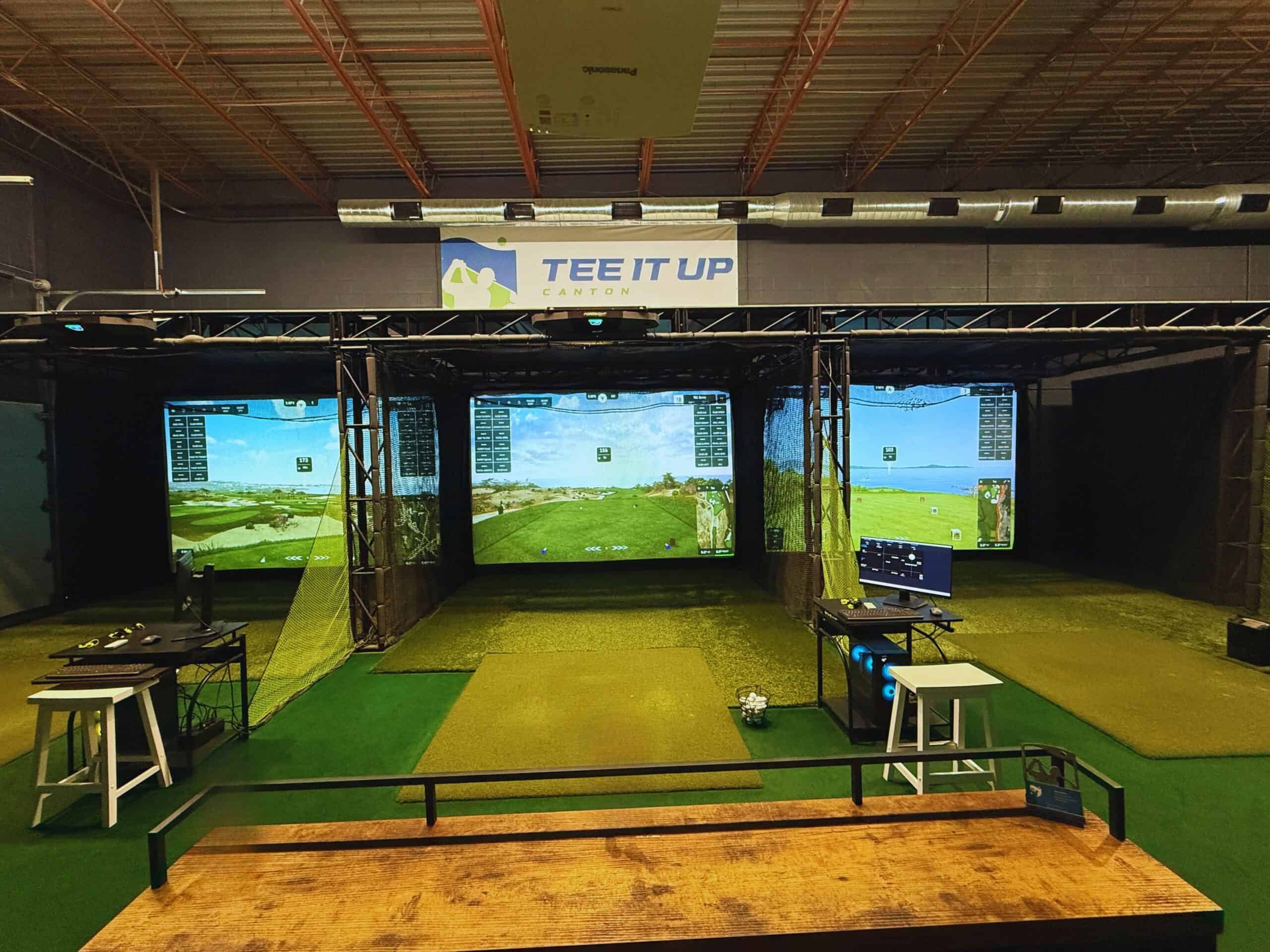
I run a four-bay indoor golf facility in Stark County. We hit on Foresight units running GSPro. My daily experience of this technology comes from one side of this comparison, so read everything below with that in mind.
That is also why this post includes a section on where our own equipment is worse. A comparison that costs the author nothing is not a comparison. It is an advertisement with a table in it.
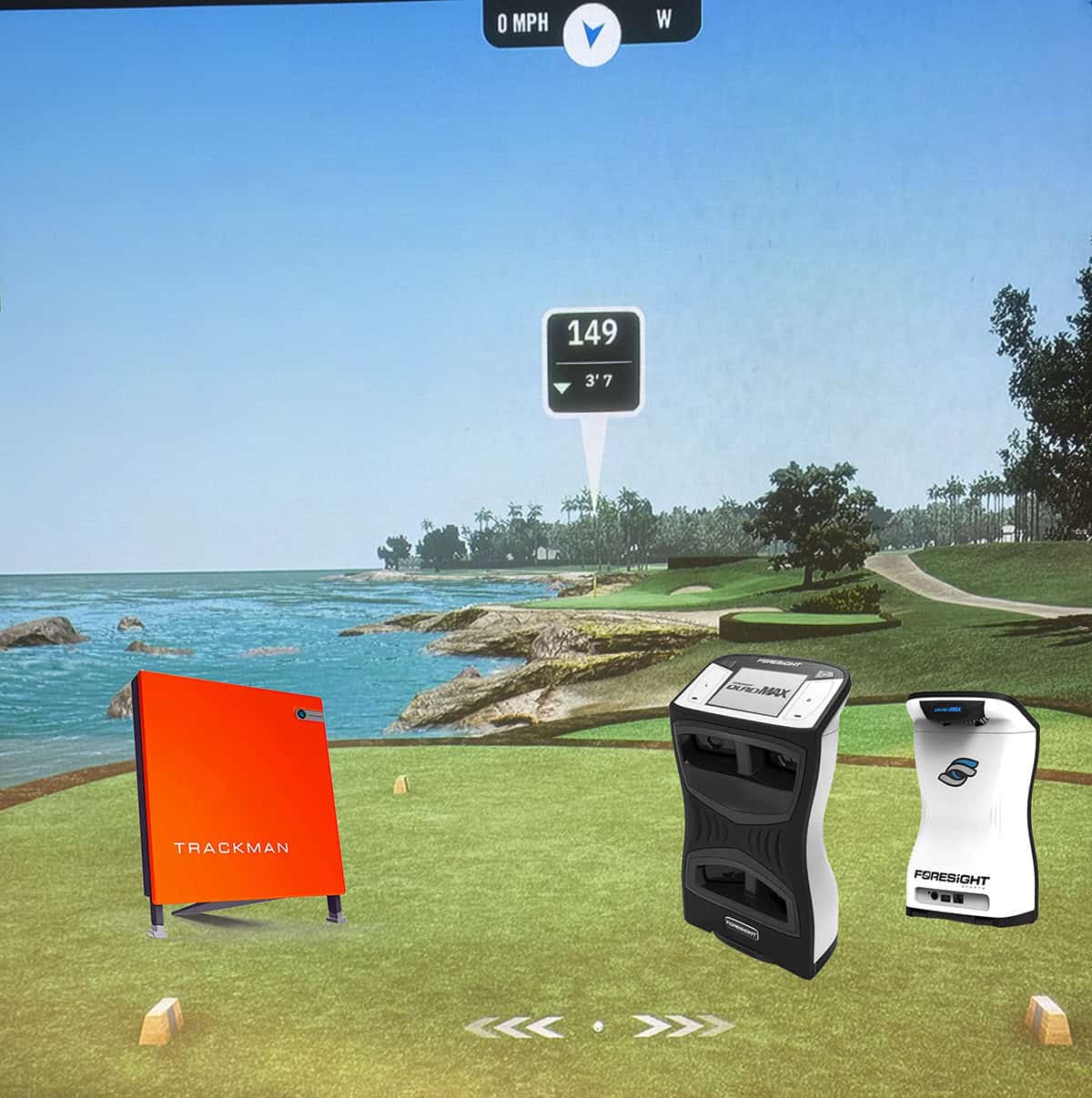
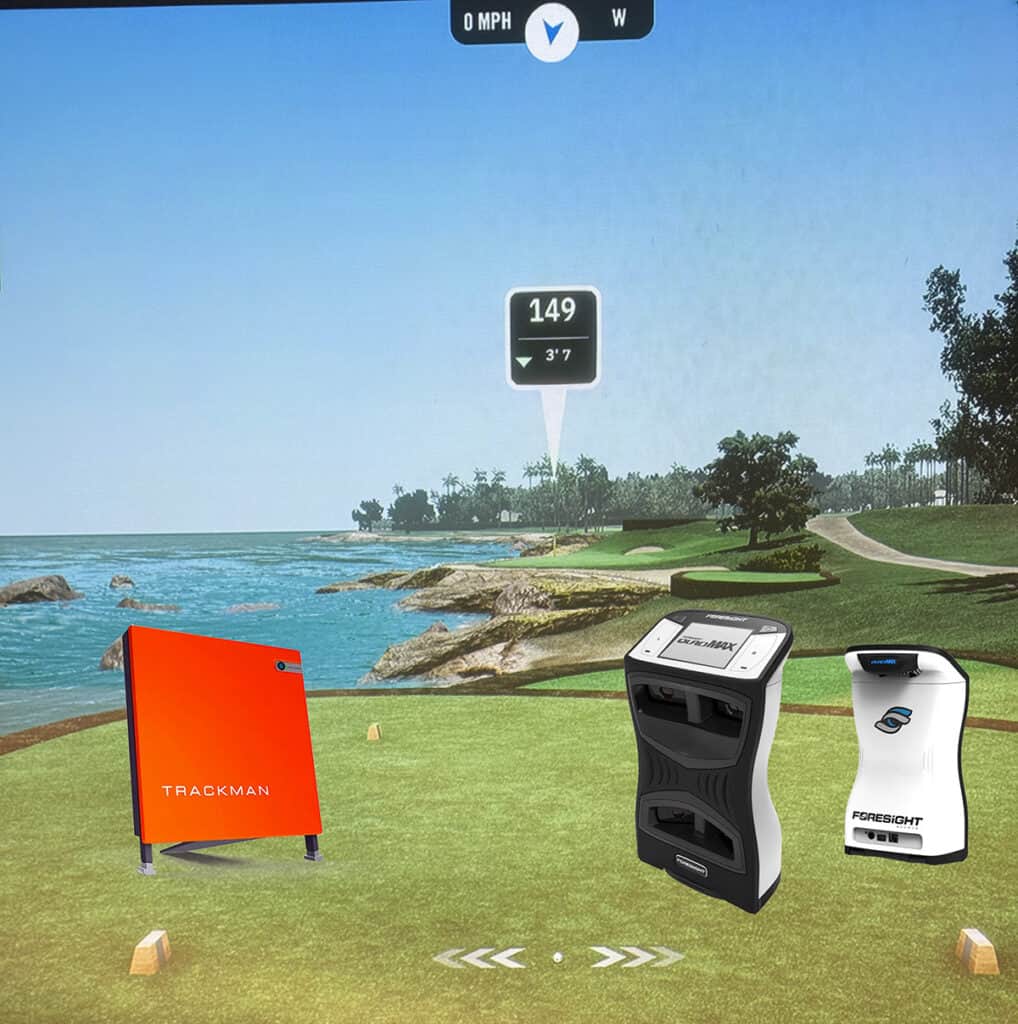
The short version: radar is the better tool outdoors and the better tool for measuring what a golf ball actually does over 250 yards. Cameras are the better tool in a room with a screen 12 feet away. Trackman’s newer indoor unit deliberately blurs that line, and it works. The rest is why, what each one costs to own for five years, and which one belongs in your space.
How each one actually measures a golf shot
Almost every argument about these two systems comes down to one difference, so it is worth being precise about it.
Trackman is radar. It uses Doppler radar to track the ball and the club through space. It watches the shot and measures the trajectory over real distance, then models the portion it didn’t see. When a Trackman tells you a shot carried 168 yards, it is reporting something close to an observation.
Foresight is photometric. High-speed cameras fire at impact and capture the ball and clubface in the first few inches of travel. From those launch conditions, the software computes where the ball would go. When a Foresight tells you a shot carried 168 yards, it reports a calculation built on a precise measurement of the moment that determined the shot.
Neither approach is more accurate in the abstract. Radar watches the shot happen. Cameras measure the instant that causes the shot.
Indoors vs outdoors
Outdoors, radar wins, and it is not particularly close. Give a Trackman a full flight to track, and it gets what it was designed for: real carry, real apex, real curve, measured against the actual ball in the actual wind. An outdoor camera unit is still computing a flight it never sees.
Indoors, radar is working with almost nothing. The ball leaves the tee and hits a screen a fraction of a second later. There is very little flight to observe, which is why indoor radar setups often want a metallic dot on the ball to read spin reliably, and why radar wants depth behind the hitting area.
Cameras do not care about the screen at all. The measurement is complete before the ball has traveled three feet. That’s why photometric units took over the commercial simulator market. The screen is not an obstacle to the measurement. It is just where the ball lands.
Credit where it belongs: Trackman built the iO specifically because indoor radar was compromised. The iO is a ceiling-mounted unit that pairs radar with a high-speed impact camera, and it exists because Trackman saw its own indoor weakness and engineered around it instead of arguing about it. That is the right response, and it means the old “radar is bad indoors” line is out of date if you are talking about the iO specifically.
Space and layout. This is the part people building a garage sim actually need:
- Foresight floor units sit beside the ball. They need to be repositioned when a left-hander steps in, which is trivial for a home setup and a small friction point in a commercial bay you will feel a hundred times a week.
- Ceiling-mounted units, the Foresight Falcon and the Trackman iO, keep the floor clear and let players switch sides instantly. That is worth real money in a rental bay.
- Trackman 4 sits behind the hitter and wants room to see. Check the current tee-to-screen spec against your actual room before you fall in love with it.
- Ceiling height and mount reinforcement matter for any overhead unit. Measure before you shop.
Sidebar: what we run and why
At Tee It Up Canton, we feature two Foresight Falcons and two GCQuads. We were familiar with Foresight’s hardware and software long before we opened our doors and believed (and still believe) camera-based launch monitors are more accurate when hitting into a screen indoors.
The dots
Most comparisons treat the club stickers as a Foresight quirk. They are not. Both systems use reflective markers, just in different places.
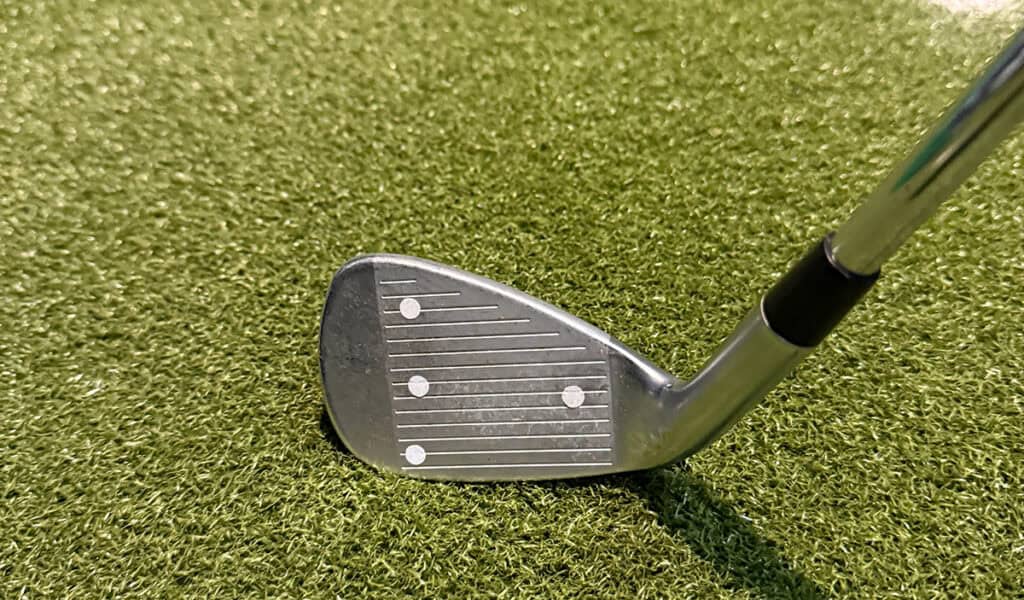
Foresight puts them on the clubface. The unit reads ball data without stickers, indoors or out. Markers are only required if you want club data, and there are two modes. One dot gives you clubhead speed, smash factor, attack angle and path. Four dots unlock the full picture: delivered loft and lie, face angle, impact location and closure rate. These are where the camera models shine.
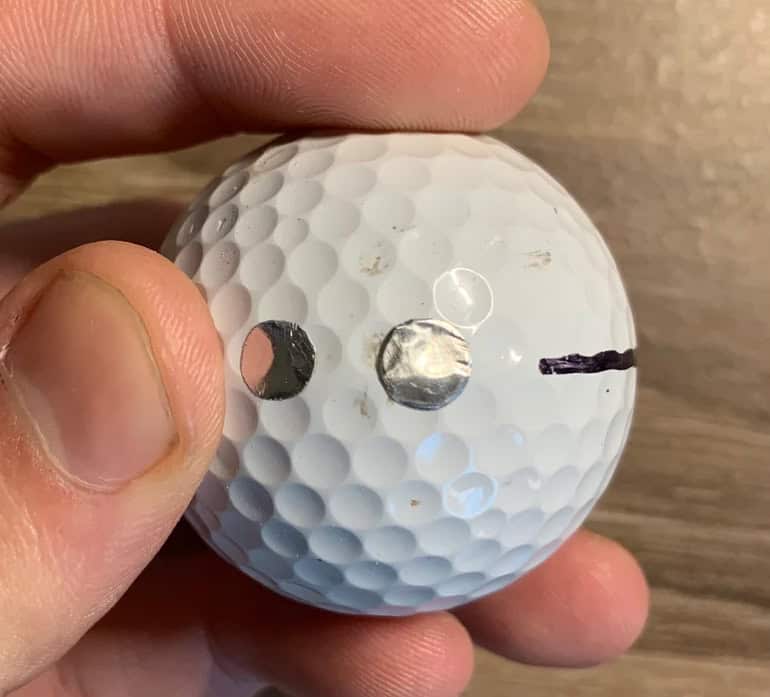
Trackman commonly puts them on the ball. Indoors, with almost no flight to measure, a metallic dot on the ball is the standard way to get reliable spin. Most brands also offer RCT golf balls with a built-in metallic dot, but they aren’t cheap. So the choice is not stickers vs. no stickers. It is stickers on your clubface or stickers on your golf balls.
What that means if you are running a business, which is the part nobody writes about:
- Guests will not apply dots. Not sometimes. Ever. Plan your bay experience around a unit that produces good ball data with no prep, because that is what will actually happen.
- Guests will ask for clubhead speed which means you and your team will have to apply dots if you use a Foresight launch monitor.
- Dots come off wedges first, and they come off anything that gets wet.
- Dots do not put a large dent in the budget. However, staff time to reapply is the real cost, and it is small but not zero.
- In a rental bay, most guests only want to see distances and accurate ball physics on the course. They do occasionally ask for clubhead speed though. In a lesson bay, all of the data matters a great deal.
At Tee It Up, we usually buy new dots about every six weeks. So, you can plan for that if you have a facility with around four or five bays.
Where our own equipment falls short
The blind spot that cannot correct itself. A camera unit never sees the ball fly, so it has no feedback loop. If the model is wrong for a particular player, a particular ball or a particular set of launch conditions, nothing in the system will ever notice. Outdoor radar gets corrected by reality on every shot. That is a structural advantage, and there is no way to argue around it.
The hitting zone is a hard constraint. Ball placement matters, alignment matters and shots struck near the edge of the capture area can degrade or fail to register at all.
The GC Falcons sometimes miss shots. We’ve noticed our overhead units are less reliable, especially with white club heads or left-handed customers.
Trackman is the reference standard, and that is a commercial disadvantage for us. Tour statistics run on Trackman data. If a customer walks into my facility knowing his Trackman numbers, my numbers have to explain themselves. Whether the gap is real, whether it is the ball model, whether it is a calibration issue, I am the one arguing. Challenging the reference standard costs the benefit of the doubt every time.
Software: open vs closed
These are two different strategies, and both are defensible. They fail in different ways.
Foresight is open. The units run FSX Play and FSX 2020 natively, and they also connect to GSPro, E6 Connect and Awesome Golf. You get more course content per dollar, and you are not locked to one vendor’s roadmap.
The cost is integration. You are running two companies’ software against one piece of hardware, and when something breaks, nobody owns the problem but you. Permissions errors. Course folder paths. A GSPro update that changes something on a Friday night with bays booked Saturday morning. That is a real operational tax, and it lands on whoever opens the building.
Trackman is closed. Trackman Performance Studio and Virtual Golf 3 only. Trackman’s software does not support GSPro or E6 Connect.
One correction, because a few sites currently get this wrong. If you have read that Trackman works with GSPro, it does not, at least not in any supported way. Some of the pages making that claim often show up in Google searches. Confirm any compatibility question with the manufacturer before you spend five figures on the assumption.
What this decides for a facility. GSPro’s community course library and per-bay pricing let a small operator offer hundreds of courses at $30 an hour and stay in business. For a home room, it is a preference. For a commercial bay, it’s economics.
What each one costs to buy
Unit | Type | Approximate price |
Foresight GC3S | Camera, subscription model | ~$3,299 |
Foresight GCQuad | Camera, four-camera | ~$11,999 base, bundles higher |
Foresight QuadMAX | Camera, four-camera, flagship | ~$19,999 |
Foresight Falcon | Camera, ceiling mount | ~$16,999 |
Trackman iO | Radar plus camera, ceiling mount | ~$13,995 to $23,995 |
Trackman 4 | Radar, portable | ~$24,995 |
Two things the spec sheets bury.
The iO’s headline price is before club data. Confirm exactly what unlocking full club data adds, because it is a significant number and it changes the comparison.
The launch monitor is roughly half the cost of a working bay. Enclosure, screen (these things wear out quickly), mat, projector, PC with a GPU that can actually drive the software, cabling, install. Budget the other half up front, or you will own an expensive box sitting in a room you cannot use yet.
Each of our bays costs around $50,000 when you incorporate everything listed above.
What each one costs per year
Ongoing cost | Approximate annual |
Trackman TPS, Home tier | ~$700/year |
Trackman TPS, Home Complete and Commercial | ~$1,100/year |
Foresight Gold subscription (GC3S and Bushnell LPi) | ~$499/year after a free first year |
Foresight full units (Falcon, QuadMAX, GCQuad, GC3) | Ship unlocked |
GSPro | ~$250/year per bay |
First-year software is usually bundled into the purchase on both sides, which makes it easy to forget the bill exists until month 13.
Commercial licensing on the Trackman side is quote-based. Get it in writing before you sign anything, and get it in writing for the number of bays you actually plan to run, not the one you are starting with.
The line items nobody quotes you:
- Club or ball markers, ongoing
- Hitting mat replacement, which for a commercial bay is a scheduled expense, not an if
- Projector bulbs or full projector replacement
- PC refresh cycle, because simulator software GPU requirements move every couple of years
- Screen and impact netting wear
Who each one is actually for
Trackman 4. You coach or fit outdoors as well as indoors; you need to take the unit to a range or a lesson tee, and you need measured ball flight rather than computed ball flight.
Trackman iO. You are building one dedicated room; you want the coaching and analysis suite; you want one vendor and one support number; and the brand recognition has commercial value to you.
Foresight Quad family. You need face-level truth. Impact location, face angle, delivered loft. If you are fitting clubs, this is what you are paying for.
Foresight plus GSPro. You are running entertainment bays, and you need maximum course variety per dollar with an ongoing cost that survives a slow summer.
Where this comparison is weak
While I’d love to say I’ve spent equal time hitting on Trackman and Foresight, I have not. Though my country club does use Trackman IO for lessons in the winter, so I am familiar with it. Most of the info on Foresight launch models is from my own experience. But I had to rely a lot on Trackman’s website for their pricing and data. If you’d like to contact me with corrections or suggestions, fill out a form on our website.
Go hit both before you spend the money
If you want to compare these yourself rather than take my word for it, facilities in the area run different setups. Here is our directory of Canton-area indoor golf facilities, so you can see for yourself.
And if you want an hour on a Foresight before you spend five figures on one, our bays are $30 an hour. An hour of your time is a cheap way to find out whether a $15,000 decision is the right one.
FAQ
Does Trackman work with GSPro? No. Trackman’s software does not support GSPro or E6 Connect. Community workarounds exist, but they are unsupported and can break with any update.
Do you need dots on your clubs for a Foresight? Only for club data. Ball data works with no markers at all. One dot gives you clubhead speed, smash factor, attack angle and path. Four dots unlock full face data.
Which is more accurate indoors? For clubface data, the camera systems measure the face directly. For ball data in a room, both are strong, and the Trackman iO was built specifically to close the indoor gap. The honest answer is that they are accurate at different things.
Which is better outdoors? Radar. It tracks the actual flight rather than computing it. If outdoor use is a real part of your plan, that should weigh heavily.
What is the cheapest way into fitting-grade club data? The entry-level camera units with a club data subscription, but check what the subscription unlocks and what it costs annually before comparing sticker prices.